August to December 2026 Calendar spans the setup weeks before a fall term as well as the final stretch before winter break. August 1, 2026, is a Saturday, and December 31 is a Thursday. Counting both endpoints, the five months cover 153 days. A student, parent, or instructor can use the whole sheet to compare school commitments with work shifts, performances, and travel before several large assignments land in the same week.
August to December 2026 Calendar: Five-Month Planner
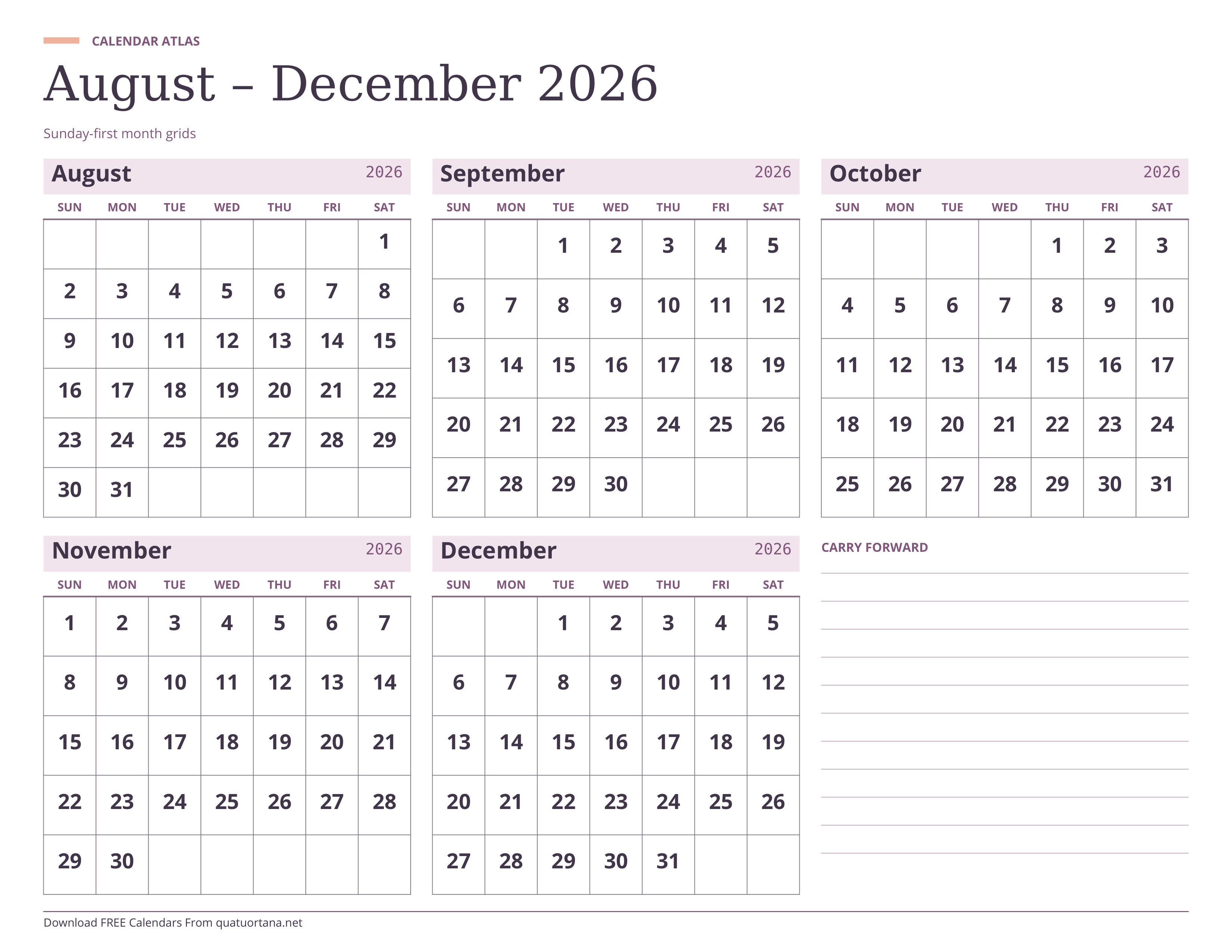
Download full-size JPG
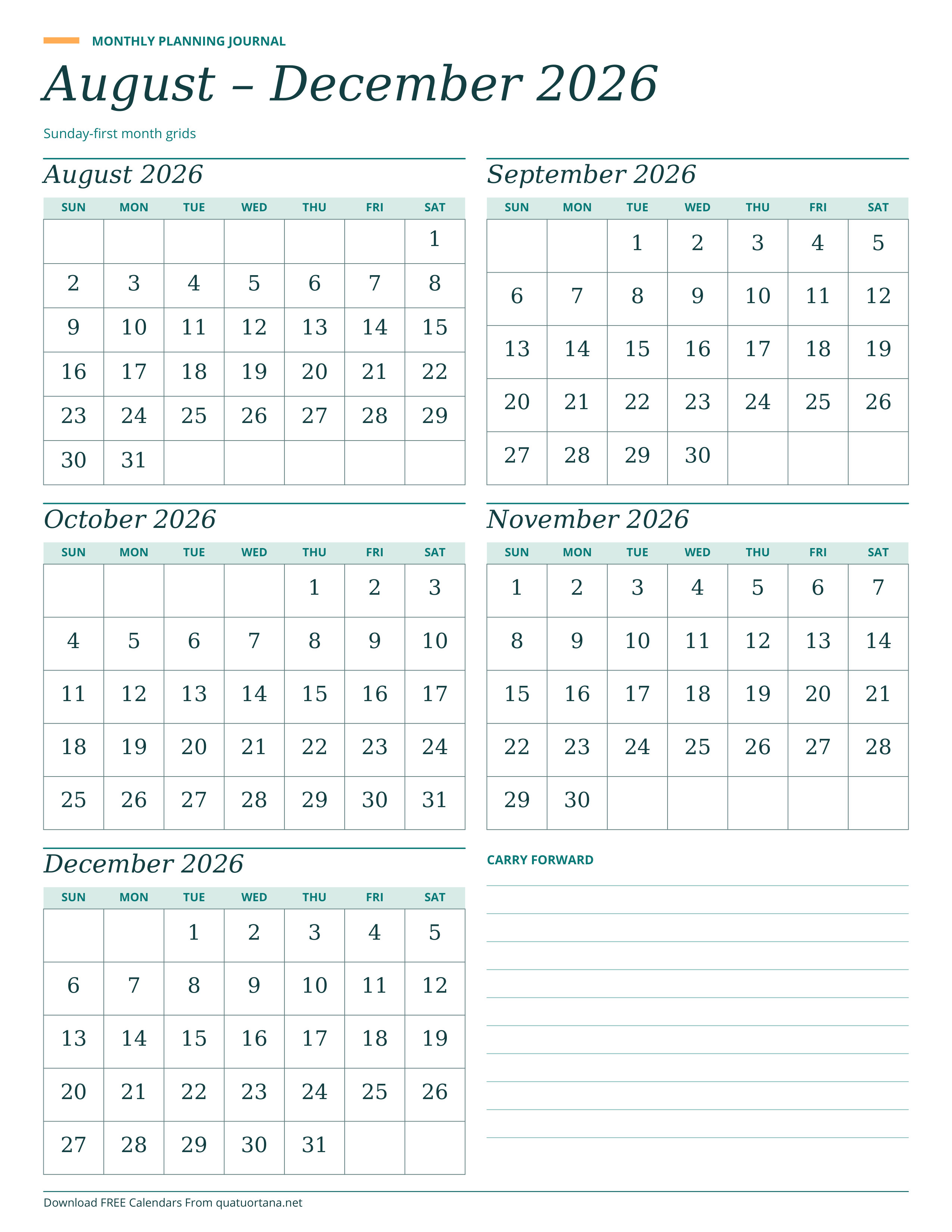
Download full-size JPG
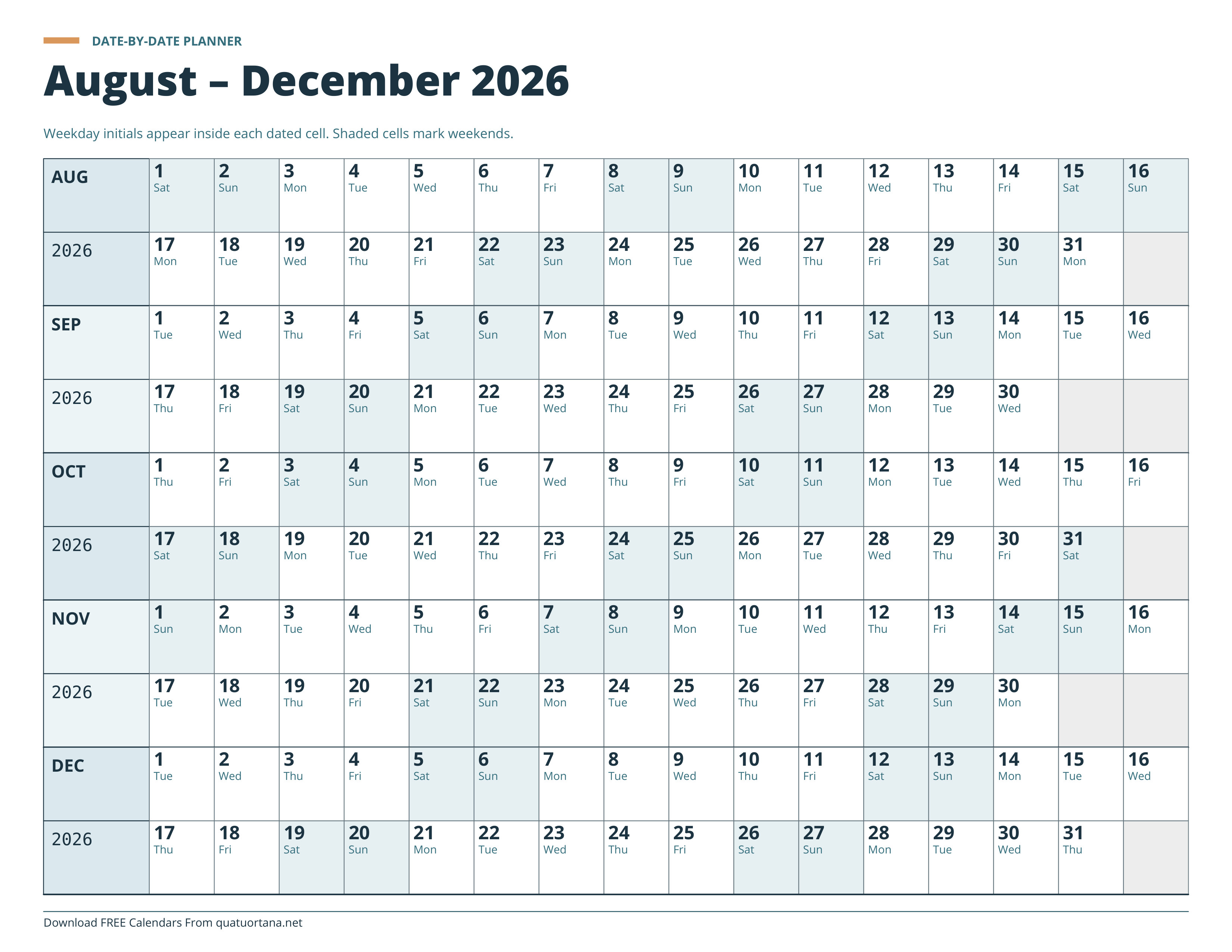
Download full-size JPG
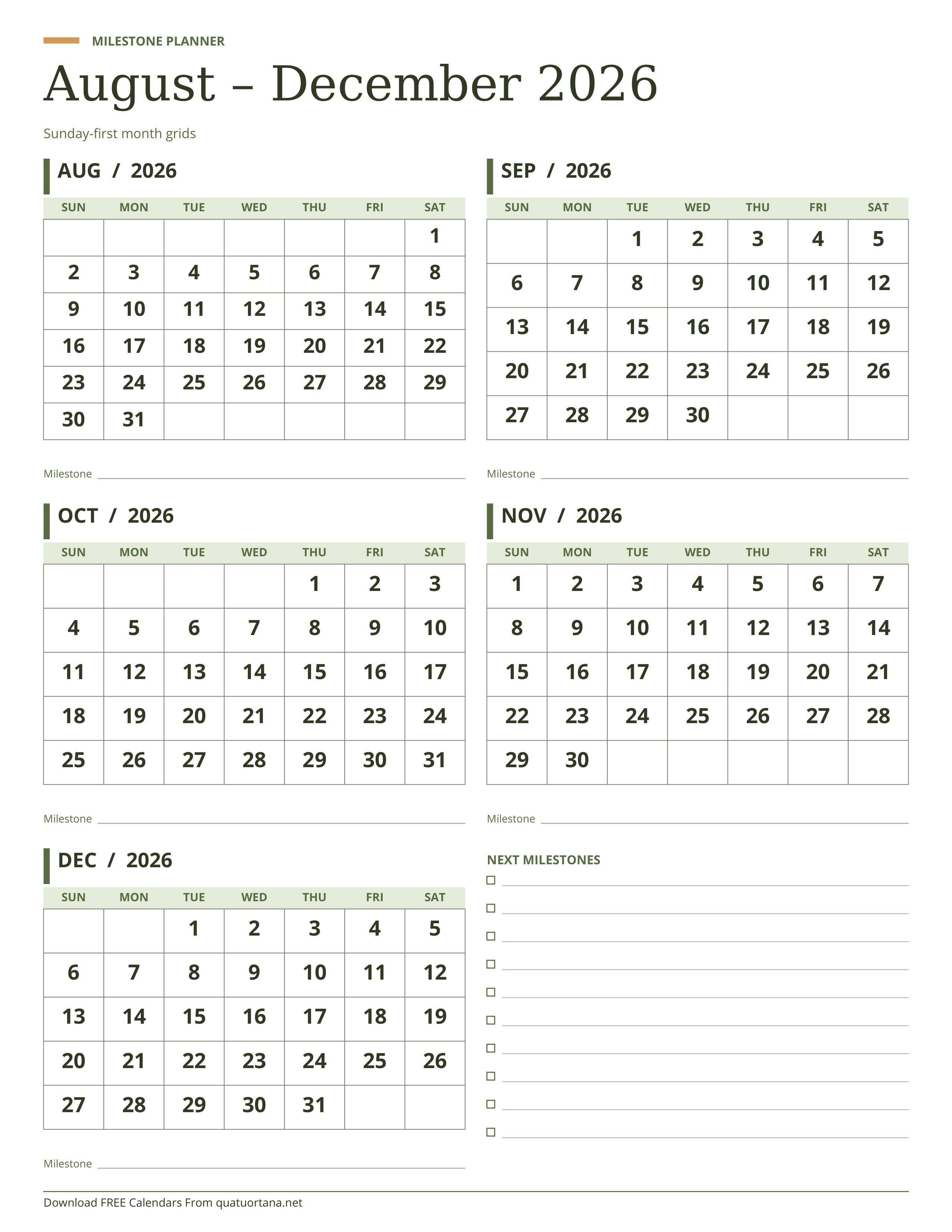
Download full-size JPG
Use August to Collect the Real Dates
A syllabus, an athletics schedule, and a district calendar can describe three different groups of people. The first day of a college course may differ from a younger sibling’s first day of school. A band rehearsal may start before either one. Gather the current notices and write the name of the source next to any date that might change. Where a school gives a range for examinations, keep the range until the individual examination time is confirmed.
August has five Mondays in 2026, ending on the 31st. If a class meets on Monday, the first meeting that feels like a September class could belong to August instead. Monday, September 7, is Labor Day, a US federal holiday. Check the school’s published schedule for that week. A class that misses a meeting might still have an online reading or a deadline in the usual spot.
Divide a Long Assignment Into Checkable Work
Imagine a student preparing a local history presentation for Friday, December 11. The assignment includes an interview, a short written script, and a rehearsal. Doing a little work “every month” is hard to verify. A dated series with visible results makes progress easier to judge. Keep course requirements beside the calendar and use the date boxes for decisions or meetings that would otherwise be easy to miss.
| Sample Date | Result to Bring Home |
|---|---|
| Friday, August 28 | A copy of the assignment and the instructor’s due date |
| Friday, September 18 | A topic the instructor accepts and an interview request sent |
| Friday, October 16 | Notes from the interview and permission for any material you plan to use |
| Friday, November 13 | A script someone can read aloud and give feedback on |
| Friday, December 4 | A timed rehearsal one week before the presentation |
Build Review Time Into an August to December 2026 Calendar
Waiting for an interview answer uses calendar time even though it takes little desk time. Mark the first request and a polite follow-up date. If the person is unavailable, have a second source or another acceptable approach ready to discuss with the instructor. On a five-month page you can see whether waiting another week will use the only open rehearsal evening later in the term.
- Copy the instructor’s final deadline and underline any part that must be turned in sooner.
- Identify the work that relies on access to another person, a room, a library collection, or a piece of equipment.
- Give each dependency a request date and a latest useful answer date.
- Place independent reading, practice, or revision between those dates so work can continue while you wait.
Find Overloaded Weeks Before the Term Gets Busy
Look across courses, activities, and family travel one week at a time. A test on Tuesday and a paper on Friday may look fine until you add rehearsals on Monday and Thursday and an evening shift on Wednesday. Circle the week and choose the job that can start in the previous one. Moving just the outline of the paper can make more difference than repeatedly moving its deadline on the planning sheet.
- Write fixed appointments in pen after you check the time, room, and campus.
- Use pencil for study sessions that can move when a teacher changes the order of lessons.
- Put a small dot by any deadline that requires uploading a file or getting a signature.
- Keep assignment descriptions in the course notebook so dates remain easy to scan from a distance.
Include the Parts of a Break That Affect Schoolwork
Thanksgiving falls on Thursday, November 26. Your institution sets its own break dates. A student traveling out of town may lose access to a studio, practice room, or borrowed equipment before the formal break begins. Mark the last day you can use the resource and the first date it is available again. If a draft depends on it, those are more useful planning dates than a general holiday label.
Review Your August to December 2026 Calendar at the End of Term
On your last class day, check for borrowed items, files that need to be submitted, and feedback you expect to receive later. If you turn in physical work, note where it was delivered and when it can be collected. A paper calendar is especially good for quick reminders about objects, such as a locker key, library book, or model that still needs a ride home.
For a family copy, agree on one letter per person and repeat the letter beside shared dates. A parent looking at the page can then tell whether a Friday entry means an event everyone attends or simply a deadline one student needs to remember. Save the completed fall sheet until the next term starts. Actual rehearsal times and crowded weeks can guide the next round of planning better than a clean syllabus alone.
Related Calendars
If summer preparation matters, use the July–December calendar. For a fall program that starts after August, use the September–December planner. For the full collection, visit the free printable December 2026 calendar.
1 thought on “August to December 2026 Calendar: Five-Month Planner”